
Cover-Up Tattoo Before and After: 8 Real Cover-Ups and Ideas That Work

Quick answer: A cover-up tattoo hides an old tattoo by designing a new one over it. The new design is usually larger and darker than the old one, and uses shading, texture and dark areas to absorb the old lines. Below are 8 real cover-ups from Mason’s Ink in Bali, each with the old tattoo shown in the corner of the photo, and ideas that work for each kind of tattoo.
For how cover-ups work, how long they take and how to book one, see our cover-up tattoos in Bali page.
8 cover-ups from our studio, before and after
Each photo shows the old tattoo in a small inset and the finished cover-up. Tap a photo to see the full piece.
1. Faded colour half sleeve to a Buddha and lotus
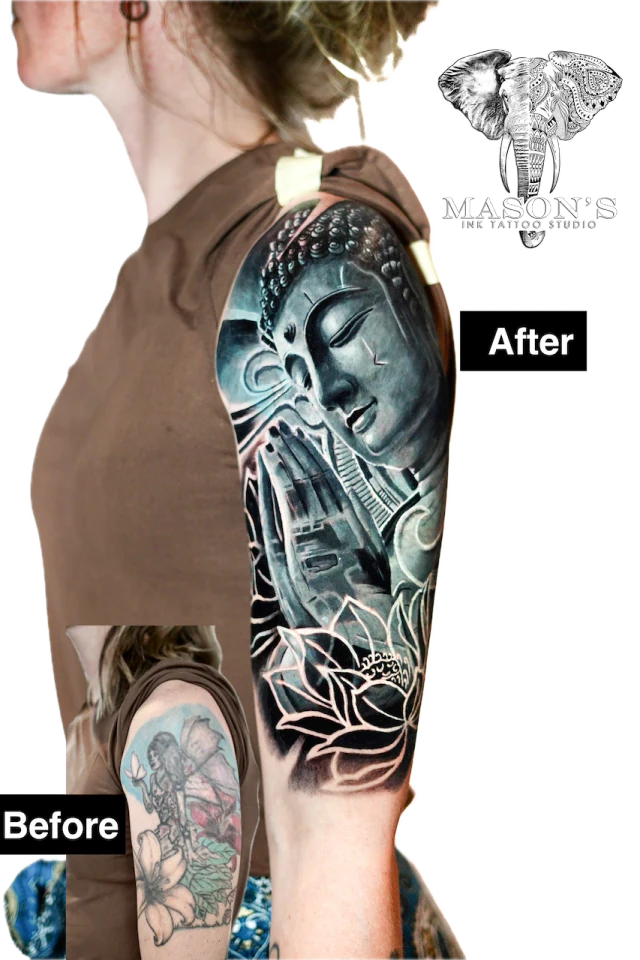
Why it works: Black and grey shading sits over old colour, and the darkest parts of the face and hands are placed over the strongest old ink. The white lotus petals land on clear skin.
2. Old dark half sleeve to a Japanese sleeve
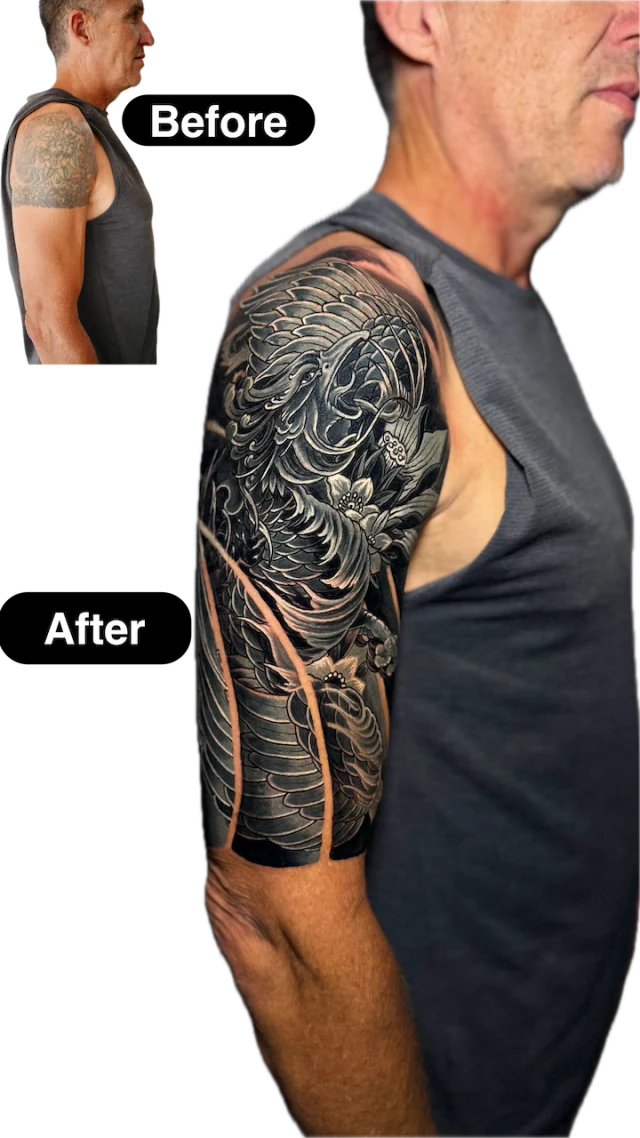
Why it works: Japanese work uses dark backgrounds, wind and waves, so there is plenty of black to absorb an old design. This is one of the best options when the old tattoo is large and dark.
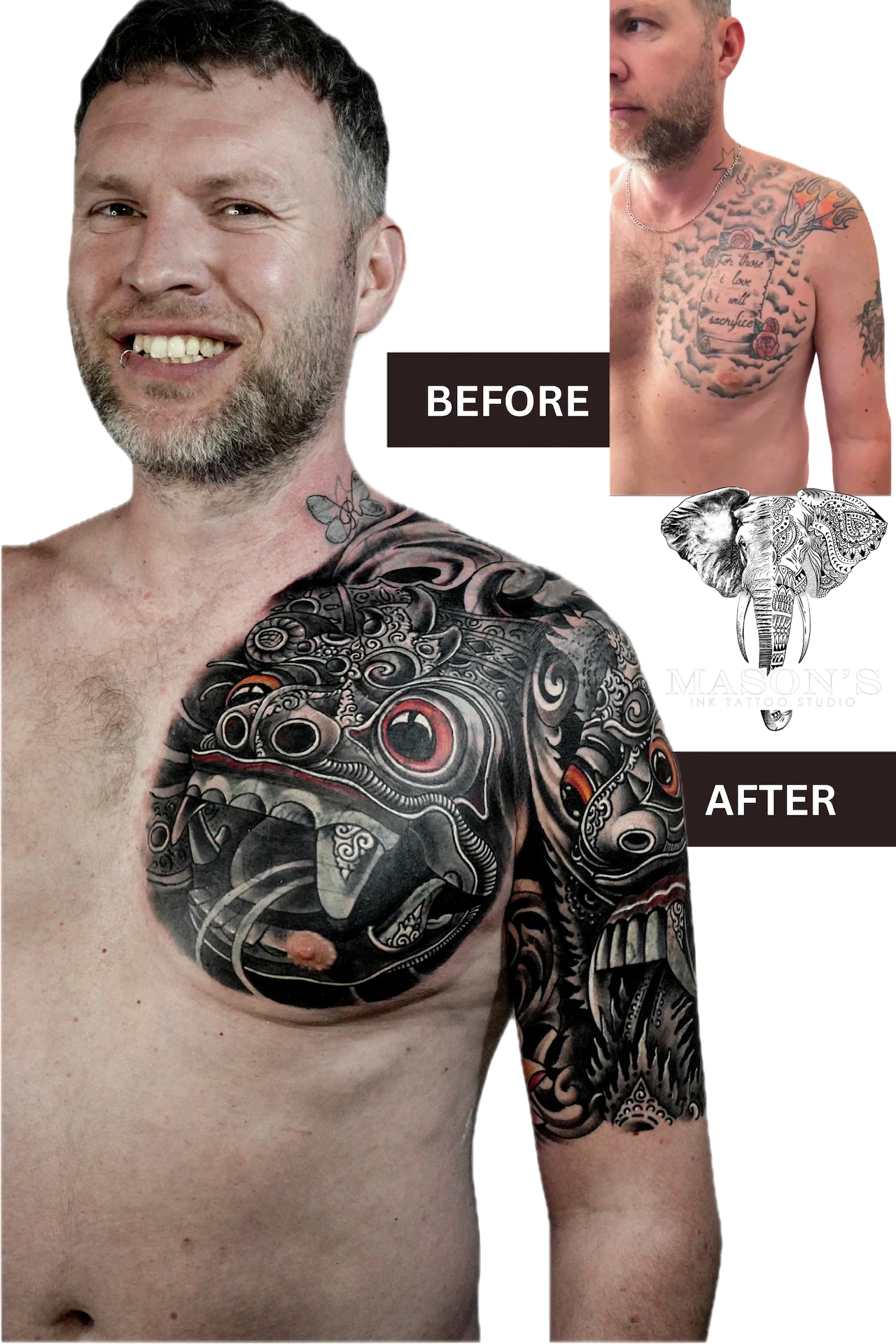
3. Small shoulder tattoo to a Balinese barong back piece
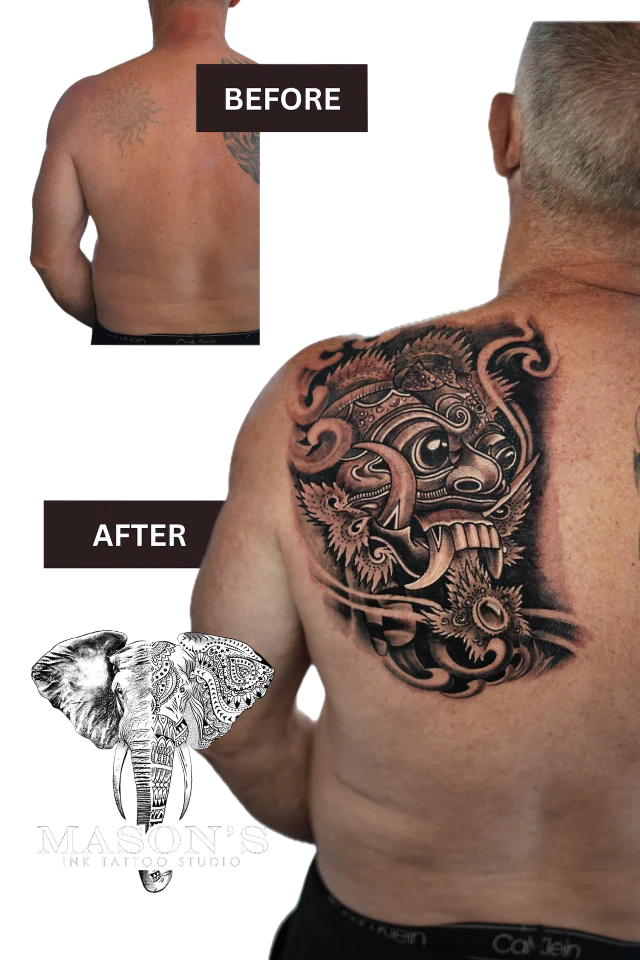
Why it works: Going much bigger than the old tattoo gives the artist room to hide it inside a detailed, dark part of the design. See our barong tattoo guide for what the barong means.
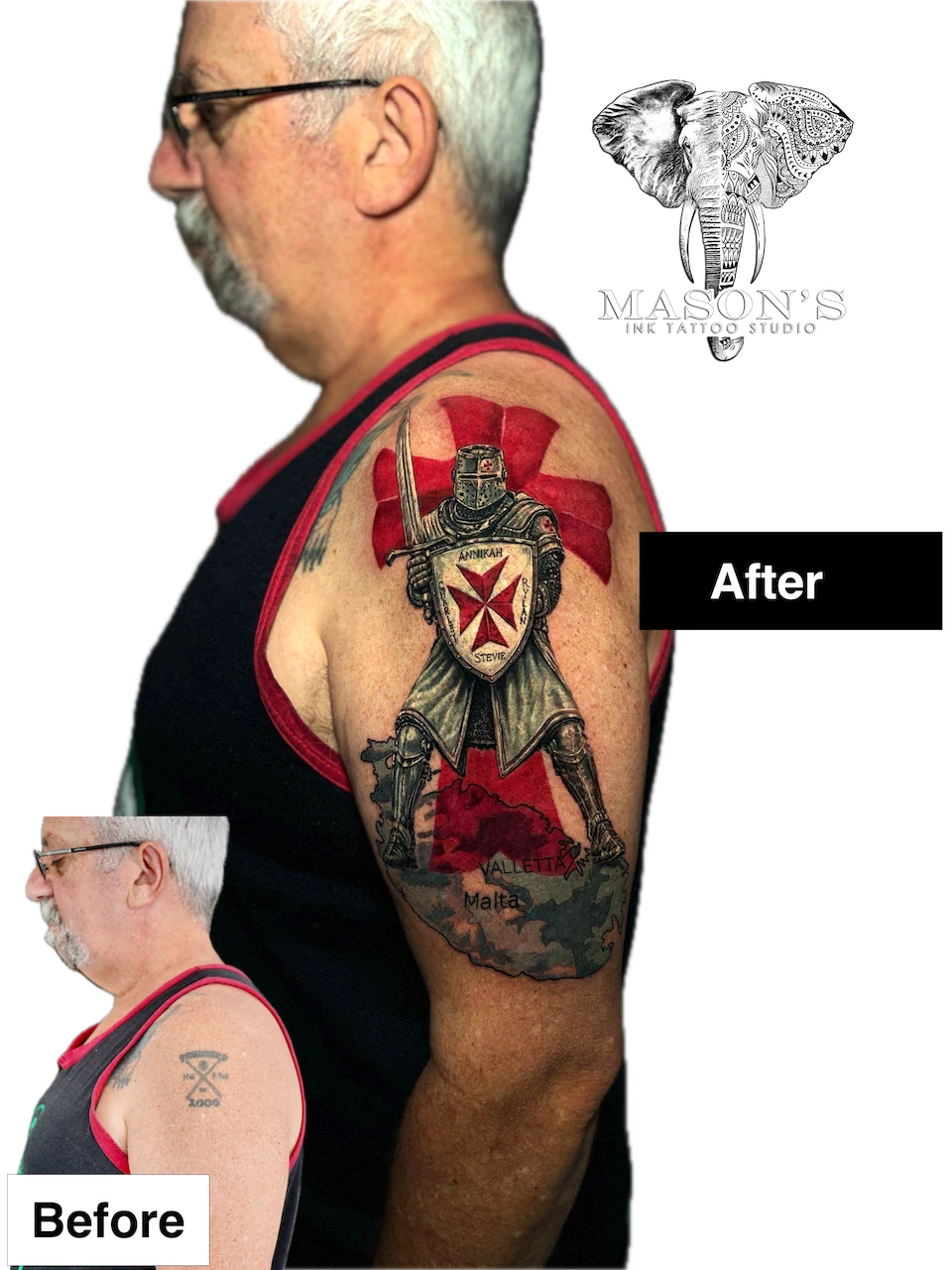
4. Dark winged shoulder tattoo to a kneeling knight
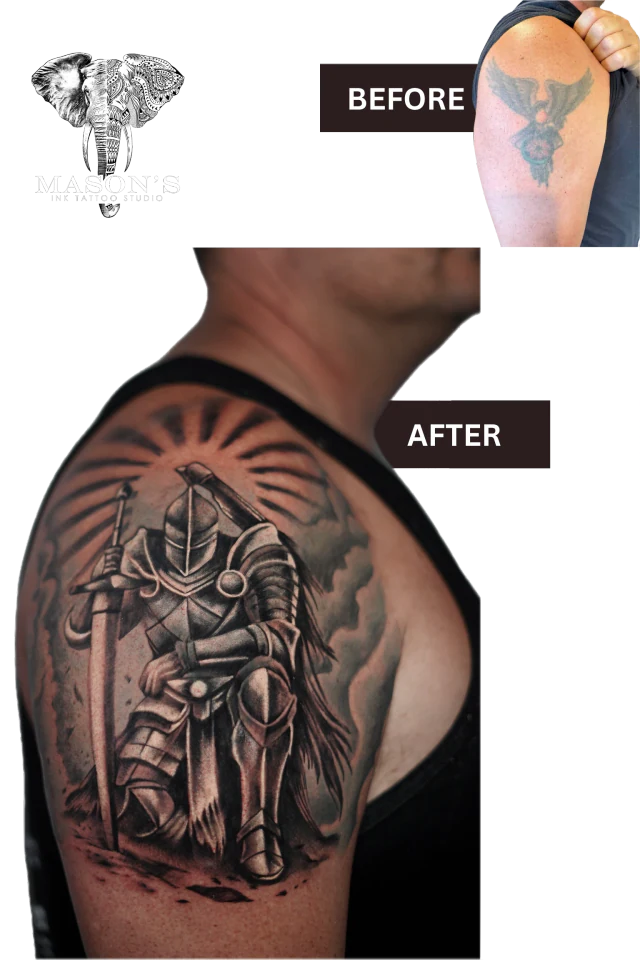
Why it works: Armour, smoke and deep shadows give the design dark areas exactly where the old wings were.
5. Small letter to a compass with filigree
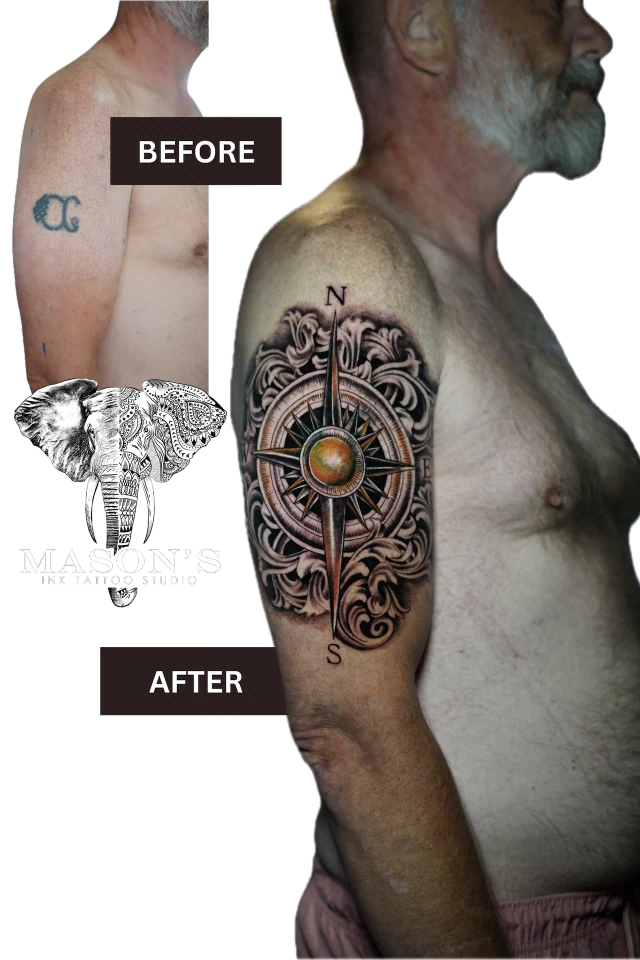
Why it works: Ornamental filigree is full of curves and shading, so a small symbol disappears into it.
6. Script on the forearm to teal peonies
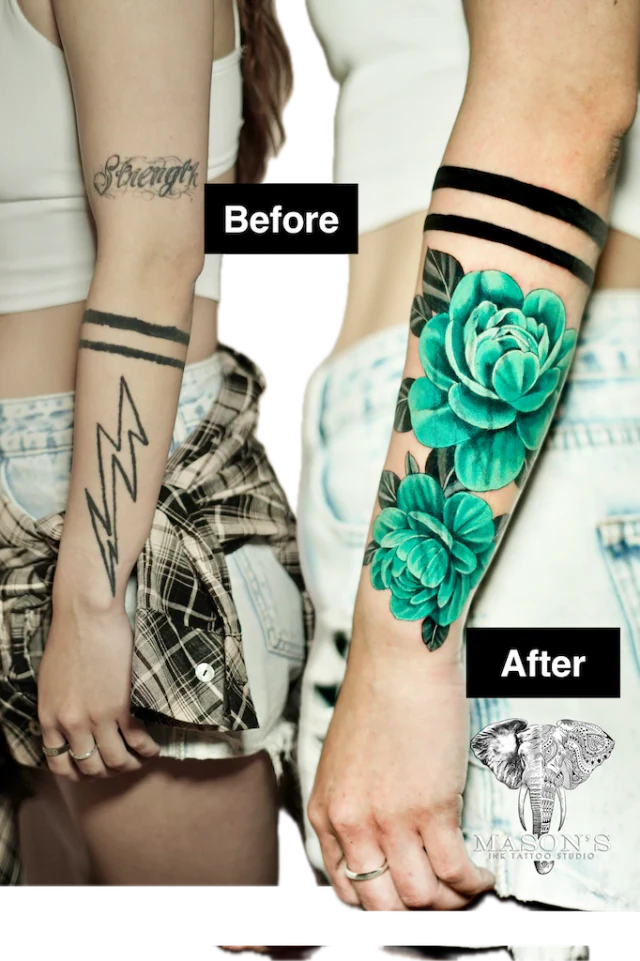
Why it works: Petals and leaves break up the shapes of letters, and a strong colour like teal covers better than pale shades.
7. Faded name to sunflowers and a butterfly
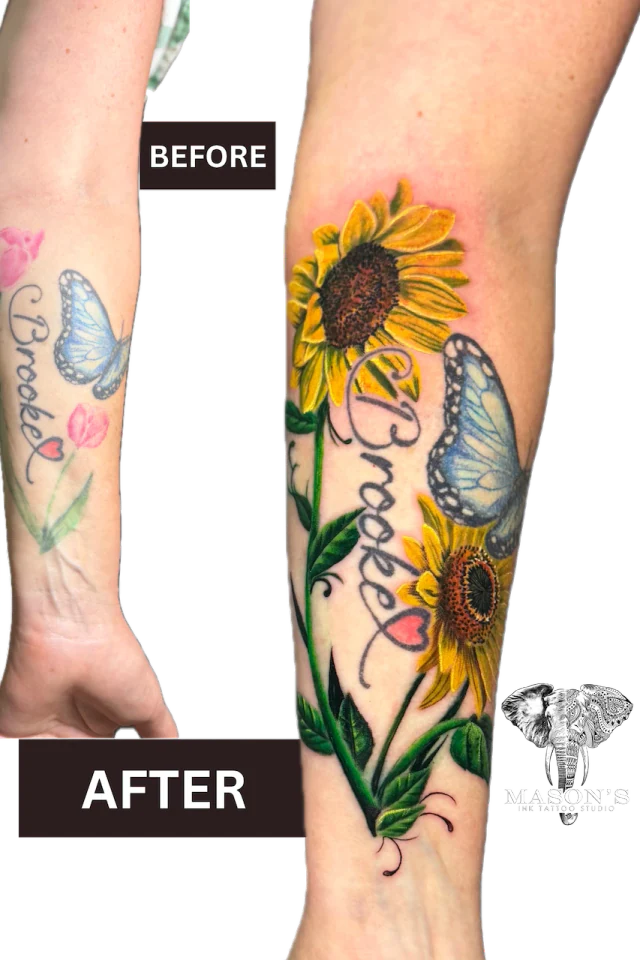
Why it works: This is a rework rather than a full cover-up. If you still love part of your tattoo, your artist can keep it and build a brighter design around it.
8. Neck lettering to a lotus and butterfly
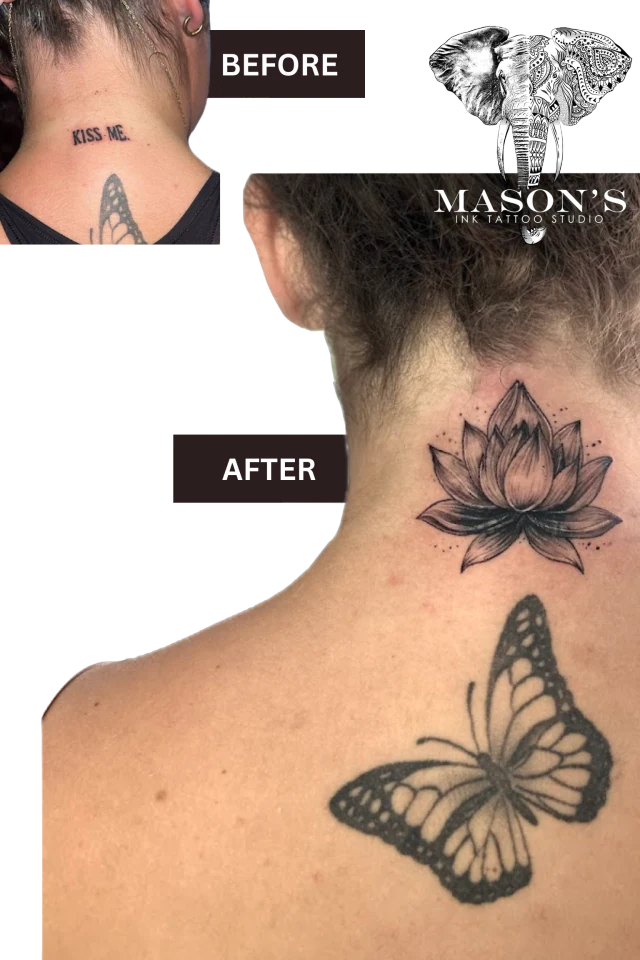
Why it works: The shaded petals and dark wings are wider than the old lines, so the text is fully hidden without making the piece heavy.
Cover-up ideas by what you want to hide
A name or script
Names and words are the most common cover-ups we do. Thin lines are easy to hide inside a busier design.
- Flowers. Roses, peonies and sunflowers have petals and leaves that break up letters well.
- Feathers and leaves. Their lines run in many directions and hide the shape of words.
- A mandala or ornamental piece. Patterns and dotwork absorb old lines.
A small wrist, ankle or neck tattoo
- A larger flower or lotus placed so its darkest centre sits over the old tattoo.
- A butterfly with dark wings. Shaded wings are often enough to hide a small symbol.
- A small floral cluster that wraps around the wrist or ankle.
Tribal or old blackwork
Solid black is the hardest ink to cover. The new design needs to be darker and larger, or the old tattoo may need a few laser sessions first to lighten it.
- Japanese designs. Dragons, koi and waves with dark backgrounds can cover a full band or sleeve.
- Barong and Balinese designs. Detailed and dark, a good way to turn an old tattoo into something with meaning.
- Black and grey realism. Lions, leopards, wolves and knights have dark fur, armour and shadows to work with.
- Blackwork. Bold black areas and patterns can cover almost anything.
A faded colour tattoo
- Bold colour florals. Deep reds, blues and teals sit well over faded colour.
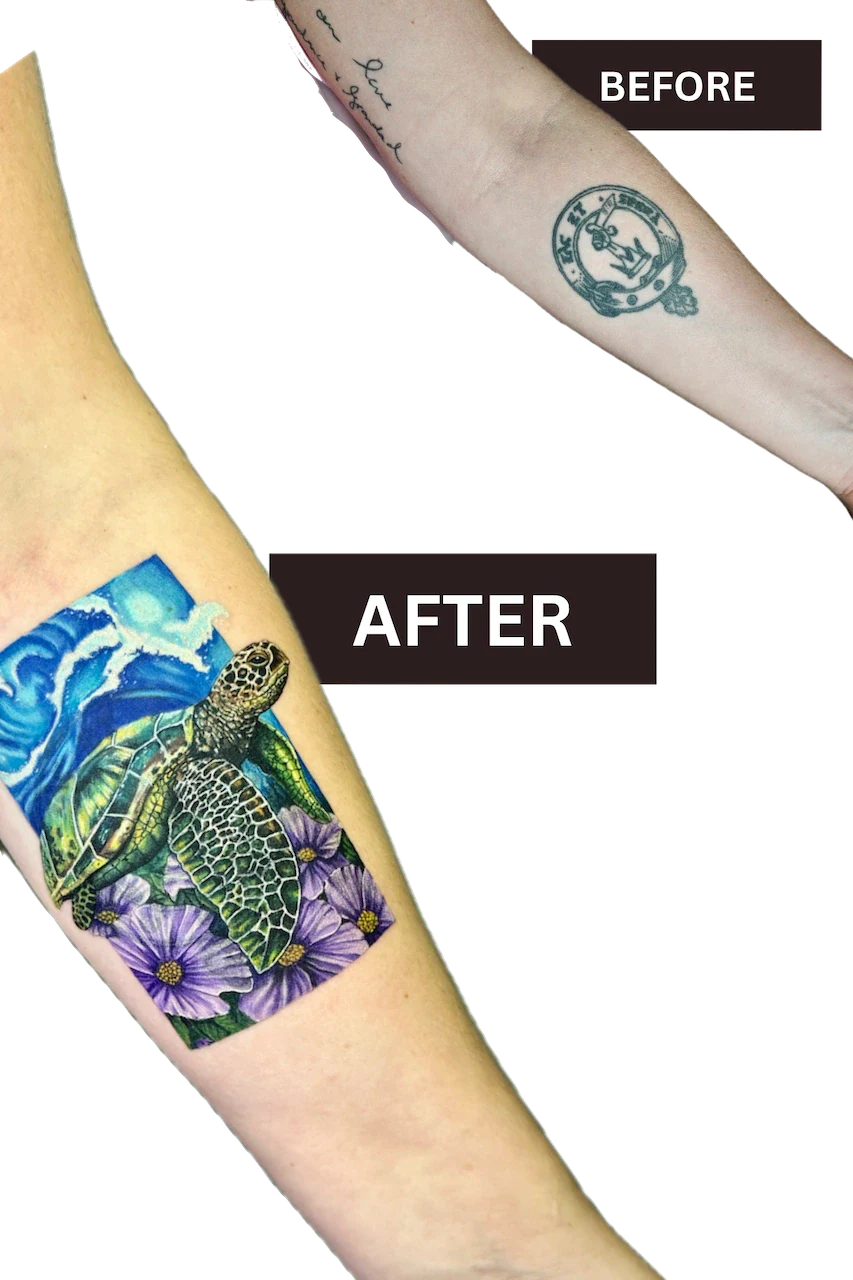
- Colour realism. Animals, sea life and portraits in strong colour.
- Black and grey. Dark shading covers old colour well, as in the Buddha sleeve above.
Light colours such as yellow and pale pink cannot hide dark ink, so they work only as accents.
A back or lower back tattoo
- A large mandala centred over the old tattoo.
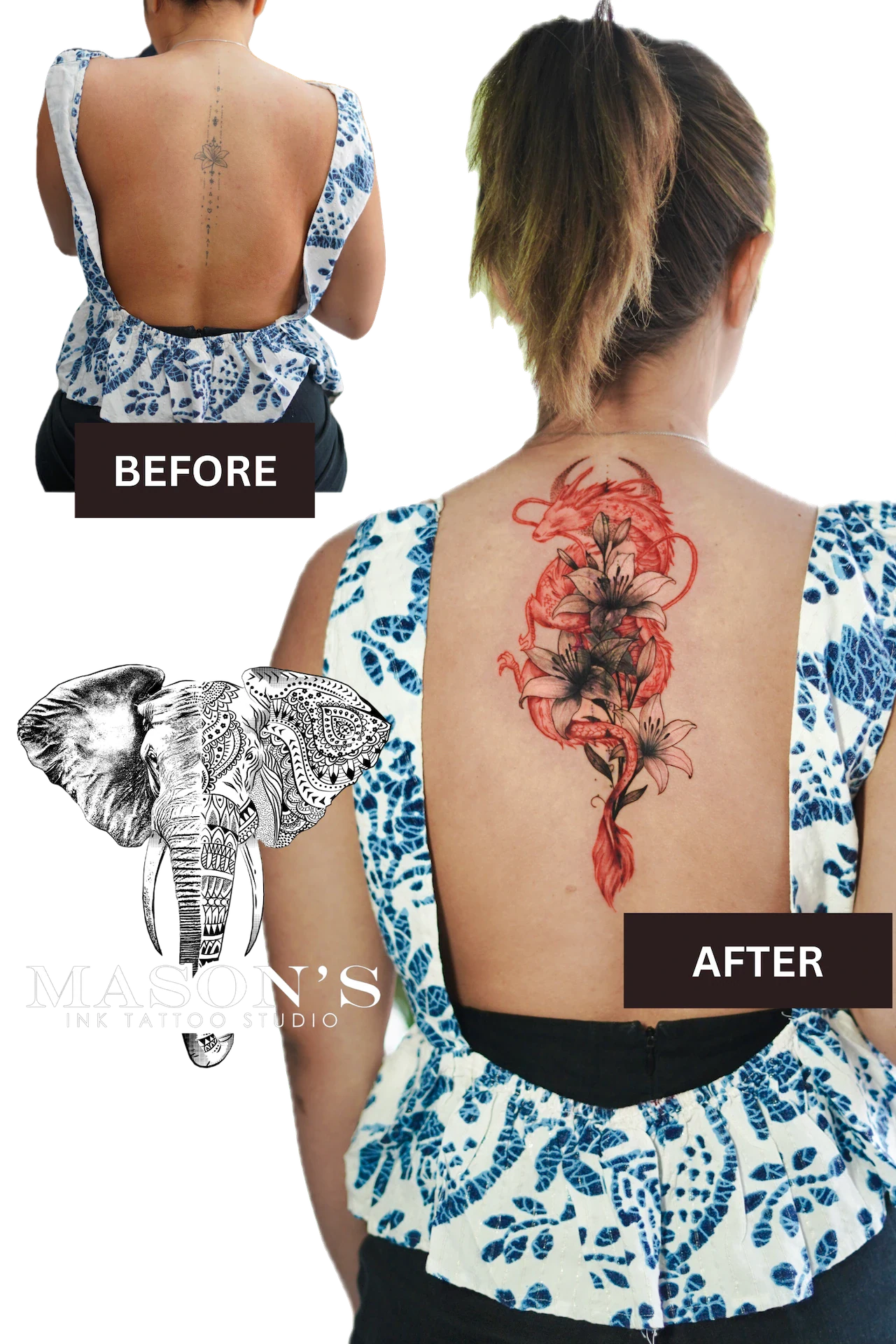
- A phoenix, dragon or floral back piece that grows the design across the back.
- A Buddha or lotus piece in black and grey for a calm, spiritual design.
Ideas that rarely work as cover-ups
- Fine line and minimalist designs, because they are too light to hide anything.
- A design the same size as, or smaller than, the old tattoo.
- Large areas of light colour or open skin over dark ink.
How to plan your cover-up
- Take clear photos of your current tattoo in daylight, one close up and one from a little further away.
- Collect ideas you like. Search our cover-up tattoos for more real examples.
- Send them to us on WhatsApp. Your artist will tell you honestly what will cover well, how big it needs to be, and whether laser fading would help first.
- Allow enough time. Cover-ups are usually larger and more detailed than the original, so many take a full day or more than one session. For sleeves and back pieces, see planning a large tattoo in Bali.
Each artist sets their own price, quoted after a free consultation. See tattoo prices in Bali for how pricing works, and browse our artists to find one whose style you like.
Questions about cover-ups
Can any tattoo be covered up?
Most tattoos can. Very dark, large or heavily saturated tattoos may need a few laser sessions first to lighten them, so the new design has more options.
How much bigger does a cover-up need to be?
Usually larger than the old tattoo, and how much depends on how dark it is. A faded name may only need a design a little bigger; solid black often needs a much larger piece.
Can I keep part of my old tattoo?
Yes. That is called a rework: your artist redraws and refreshes the part you want to keep and builds the new design around it, like the sunflower piece above.
Can a cover-up be done in one visit to Bali?
Small and medium cover-ups are often done in one session. Larger ones may take a full day or several sessions, so tell us your travel dates when you send your photos.
Below are more cover-ups made at Mason’s Ink.
Browse our Bali tattoo artists and read how to find the best tattoo studio in Bali before you book.